You Already Know More Than You Think
Think about it. You probably already have a rough sense of when your period is coming. Maybe your skin breaks out a few days before. Maybe you get that familiar lower back ache, or you suddenly want to eat everything in sight. Your body drops hints all the time.
The trick is turning those hints into something you can actually rely on. And the good news? You don't need to hand over your most personal health data to a tech company to do it.
The Basics of Cycle Prediction
Most period prediction comes down to one simple idea: your cycle has a pattern. It might not be a perfect 28-day clockwork cycle (most people's aren't), but over a few months of tracking, a rhythm usually emerges.
Here's what you need to get started:
- Your period start dates. That's it for the basics. Just the first day of bleeding, each month.
- Three to four months of data. The more months you log, the more accurate your average cycle length becomes.
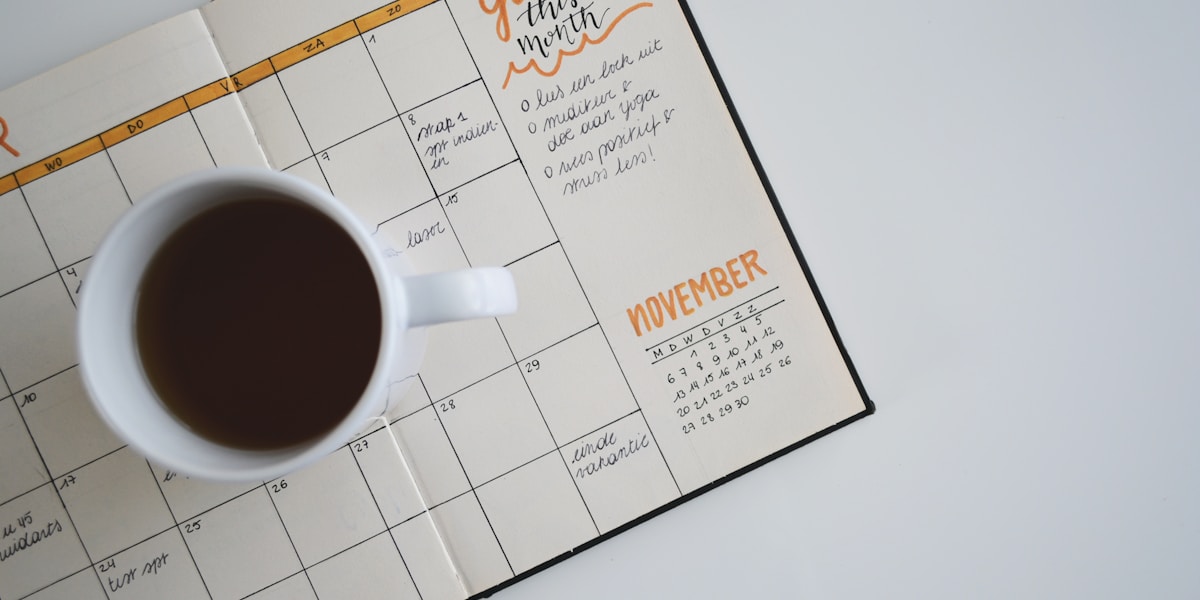
- A place to write it down. A notebook, a calendar, or a simple app that keeps your data on your phone.
Once you have a few months recorded, add up the days between each start date, then divide by the number of cycles. That's your average cycle length. From there, you can count forward from your last period to estimate when the next one will arrive.
It really is that straightforward.
What Makes Predictions More Accurate
The start date alone gets you pretty far. But if you want to fine-tune things, paying attention to a few extra signals can help.
Track your symptoms. Things like bloating, breast tenderness, mood shifts, and energy dips often show up at consistent points in your cycle. After a few months, you might notice that you always get a headache two days before your period, or that your mood dips about a week out. These become your personal early warning system.If you're curious about which symptoms are worth paying attention to, this guide on period symptoms and what they could tell you is a great place to start.
Note any disruptions. Stress, travel, illness, major sleep changes, and intense exercise can all shift your cycle by a few days. If you had the flu last month and your period came late, that's useful context. It means your "average" is still reliable, and last month was just an outlier. Watch for trends over time. Cycles can gradually shift as you age, change birth control, or go through major life changes. A prediction based on the last three months is usually more accurate than one based on the last twelve.Why You Don't Need to Share This Data
Here's where things get personal, literally.
Period data is some of the most intimate health information you have. It can reveal whether you might be pregnant, going through menopause, dealing with a hormonal condition, or managing a health issue you haven't told anyone about. And yet, many popular tracking apps upload this data to company servers, sometimes sharing it with third parties or using it for advertising.
If that makes you uncomfortable, you're not alone. A growing number of people are looking for ways to keep their health data private without giving up the convenience of digital tracking.
The reality is that period prediction doesn't require cloud computing or AI. The math is simple. Your phone can handle it entirely on its own, with no internet connection, no account creation, and no data leaving your device.
A Simple Method You Can Start Today
If you want to try predicting your next period right now, here's a step-by-step approach:
Step 1: Gather your last few start dates. Check your calendar, texts to friends, or any notes you've made. Even two or three dates give you something to work with. Step 2: Calculate your average. Count the days between each start date. Add those numbers together and divide by how many gaps you counted. For example, if your last three cycles were 29, 31, and 28 days, your average is 29.3 days. Step 3: Count forward. From the first day of your most recent period, count forward by your average cycle length. That's your estimated next start date. Step 4: Build in a buffer. Give yourself a window of plus or minus two days. Very few people have cycles that land on the exact same day every month, and that's completely normal. Understanding what affects your cycle length can help you make sense of any variation. Step 5: Refine each month. Every time your period arrives, update your average. The more data points you have, the tighter your prediction window becomes.When a Simple App Helps
Pen and paper works. But if you'd rather not do mental math every month, a basic tracker app can automate the prediction part for you.
The key is choosing one that does the calculation locally, on your device, without requiring a login or sending your data anywhere. sCycle was built with exactly this in mind. It tracks your cycle, predicts your next period, and keeps everything stored on your phone. No account, no cloud, no data collection.
If you're new to tracking in general, this beginner's guide to period tracking walks through what's worth logging and why.
What About Irregular Cycles?
If your cycle length varies a lot, say anywhere from 24 to 38 days, prediction gets harder but not impossible.
A few tips for irregular cycles:
- Use a wider prediction window. Instead of plus or minus two days, give yourself a week.
- Weight recent cycles more heavily. Your last two or three cycles are usually more predictive than cycles from six months ago.
- Track symptoms as your main signal. When the math is less reliable, your body's physical cues become even more valuable. That consistent breakout or mood shift might be your most accurate predictor.
- Look for patterns in the irregularity. Maybe your cycle is shorter in winter and longer in summer. Maybe it shifts after stressful work weeks. These patterns within the irregularity are still patterns.
And if your cycles are consistently very irregular, very short (under 21 days), or very long (over 45 days), it's worth mentioning to a doctor. Sometimes your cycle is telling you something important about your health.
Understanding Your Phases
Once you're comfortable predicting your period, the next level is understanding the different phases of your cycle. Each phase comes with its own hormonal shifts, energy levels, and tendencies.
Knowing where you are in your cycle can help you plan workouts, anticipate mood changes, and even understand why you sleep better some weeks than others. This simple guide to your cycle phases breaks it all down without the medical jargon.
The Bottom Line
Predicting your next period doesn't require sophisticated technology or sharing your personal data with strangers. It requires paying attention to your body, writing a few things down, and doing some simple math.
The tools that help you most are the ones that respect the personal nature of what you're tracking. Whether you use a notebook, a calendar, or a privacy-first app, the power of prediction should stay exactly where your data does: with you.
Your body. Your data. Your cycle, on your terms.